History & public life · Autograph & handwriting
Peter the Great signature
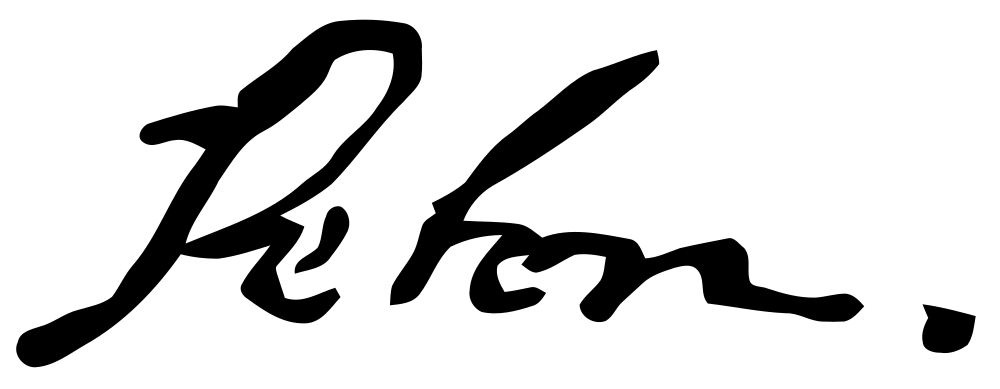
A large dark opening loop leads into a short connected first-name group.
What does Peter the Great’s signature look like?
A large dark opening loop leads into a short connected first-name group. Taller angular strokes interrupt the centre before a low rightward ending and separate dot.
- Slant
- +39°forward
- Baseline
- −0.4°near level
- Width / height
- 2.77 : 1overall proportions
- Opening height
- 0.81×opening versus body letters
A short dark first-name mark with a separate final dot
A large dark opening loop leads into a short connected first-name group. Taller angular strokes interrupt the centre before a low rightward ending and separate dot. Compare the opening’s broad enclosure with the small later forms: the abbreviated royal specimen gains most of its emphasis from the first gesture rather than a full surname band.
Peter the Great signature analysis
Peter the Great’s signature sample has 39° of forward slant, a near-level baseline and 1 enclosed loop. Use the layers to follow the writing line, letter band, slant and enclosed loops.
- Slantforward
- +39°
- Baselinenear level
- −0.4°
- Width / heightoverall proportions
- 2.77 : 1
- Opening heightopening versus body letters
- 0.81×
- Enclosed loopsclosed spaces in the image
- 1
- Ink groupsmain disconnected groups
- 4
- Ink densityinside the signature bounds
- 18.7%
- Underlinelower flourish
- 34% of width
- Finish heightrelative to the letter body
- −0.07×
Opening, letter body and finish
The opening is lower than the typical letter body. The opening-to-body ratio is 0.81×, while the whole image is 2.77 times as wide as it is tall. The rightmost ink finishes below the writing line; look at this ending separately from the slant of the letters themselves.
Loops and the lower flourish
The sample contains 1 enclosed loop and 4 main ink groups. The lower flourish spans about 34% of the full ink width, giving the name another line to follow beneath its letters.
Peter the Great’s signature in graphology
Traditional graphology associates an enlarged opening with public emphasis. The compact angular continuation gives this short mark the economical rhythm linked with directness, followed by a restrained separated closing accent.
Follow the forward-leaning strokes in this image alongside the lower flourish. For another perspective on your own writing, the handwriting analysis tool brings slant, size and spacing into a full-page reading.
Signatures with similar shapes
Compare these samples’ slant, proportions and letter rhythm with Peter the Great’s autograph.