Science · Autograph & handwriting
Carl Linnaeus signature
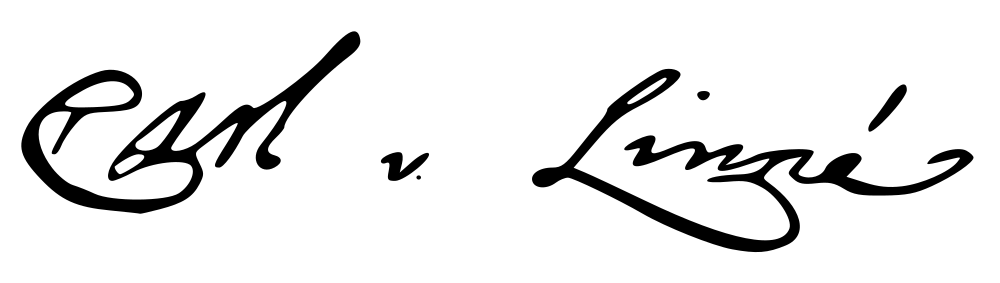
A large rounded C begins Carl, followed by a small separated v and a longer Linné group.
What does Carl Linnaeus’s signature look like?
A large rounded C begins Carl, followed by a small separated v and a longer Linné group. The surname includes a low looping return and a detached accent above its later letters.
- Slant
- ≥ +40°forward
- Baseline
- +1.4°near level
- Width / height
- 4.31 : 1overall proportions
- Opening height
- 2.22×opening versus body letters
Carl v Linné with a broad opening C
A large rounded C begins Carl, followed by a small separated v and a longer Linné group. The surname includes a low looping return and a detached accent above its later letters. Compare the three spaced regions with the connections inside each word: the signature stays readable while changing scale between initials and smaller forms.
Carl Linnaeus signature analysis
Carl Linnaeus’s signature sample has a forward slant at the edge of the measured range, a near-level baseline and 2 enclosed loops. Use the layers to follow the writing line, letter band, slant and enclosed loops.
- Slantforward
- ≥ +40°
- Baselinenear level
- +1.4°
- Width / heightoverall proportions
- 4.31 : 1
- Opening heightopening versus body letters
- 2.22×
- Enclosed loopsclosed spaces in the image
- 2
- Ink groupsmain disconnected groups
- 4
- Ink densityinside the signature bounds
- 11.7%
- Underlineno long lower flourish
- None
- Finish heightrelative to the letter body
- +0.40×
Opening, letter body and finish
The enlarged opening stands above the smaller letters. The opening-to-body ratio is 2.22×, while the whole image is 4.31 times as wide as it is tall. The rightmost ink finishes above the writing line; look at this ending separately from the slant of the letters themselves.
Loops and the lower flourish
The sample contains 2 enclosed loops and 4 main ink groups. The letterforms carry the main horizontal movement; there is no long lower underline detected beneath their band.
Carl Linnaeus’s signature in graphology
Traditional graphology associates an enlarged rounded opening with public emphasis. The clear gaps give this specimen a deliberate segmented rhythm, while the surname’s lower return adds a restrained expressive flourish.
Follow the forward-leaning strokes in this image alongside the enlarged opening. For another perspective on your own writing, the handwriting analysis tool brings slant, size and spacing into a full-page reading.
Signatures with similar shapes
Compare these samples’ slant, proportions and letter rhythm with Carl Linnaeus’s autograph.